Tea Culture in Song Dynasty of China
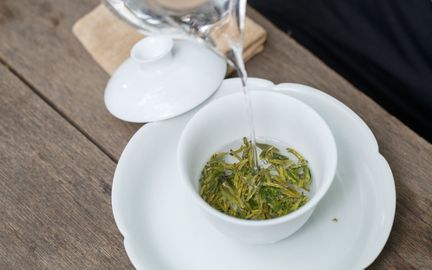
In the Song dynasty the whipped tea came into fashion and created the second school of Tea. The leaves were ground to fine powder in a small stone mill, and the preparation was whipped in hot water by a delicate whisk made of split bamboo. The new process led to some change in the tea-equippage of Luwuh, as well as in the choice of leaves. Salt was discarded forever. The enthusiasm of the Sung people for tea knew no bounds. Epicures vied with each other in discovering new varieties, and regular tournaments were held to decide their superiority. The Emperor Kiasung (1101-1124), who was too great an artist to be a well-behaved monarch, lavished his treasures on the attainment of rare species. He himself wrote a dissertation on the twenty kinds of tea, among which he prizes the "white tea" as of the rarest and finest quality.
The tea-ideal of the Song differed from the Tangs even as their notion of life differed. They sought to actualize what their predecessors tried to symbolise. To the Neo-Confucian mind the cosmic law was not reflected in the phenomenal world, but the phenomenal world was the cosmic law itself. Aeons were but moments--Nirvana always within grasp. The Taoist conception that immortality lay in the eternal change permeated all their modes of thought. It was the process, not the deed, which was interesting. It was the completing, not the completion, which was really vital. Man came thus at once face to face with nature. A new meaning grew into the art of life. The tea began to be not a poetical pastime, but one of the methods of self-realisation. Wangyucheng eulogised tea as "flooding his soul like a direct appeal, that its delicate bitterness reminded him of the aftertaste of a good counsel." Sotumpa wrote of the strength of the immaculate purity in tea which defied corruption as a truly virtuous man. Among the Buddhists, the southern Zen sect, which incorporated so much of Taoist doctrines, formulated an elaborate ritual of tea. The monks gathered before the image of Bodhi Dharma and drank tea out of a single bowl with the profound formality of a holy sacrament. It was this Zen ritual which finally developed into the Tea-ceremony of Japan in the fifteenth century.